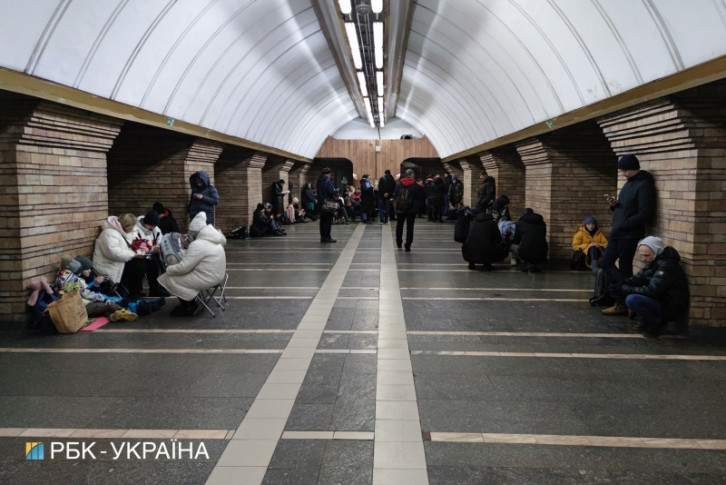
Запитання, винесене у заголовок цього матеріалу, сьогодні не є художньою метафорою чи літературним перебільшенням. Це кристально чесна, брутальна й часто неозвучена вголос думка, з якою щодня прокидаються і засинають мільйони українців — на передовій, у прифронтових містах та у відносному тилу.
Чотири роки безперервної війни, щоденні повітряні тривоги, нічні удари балістики, щохвилинне очікування новин від близьких із фронту та хронічна невизначеність майбутнього створили рівень психологічного навантаження, який важко порівняти з досвідом мирного життя.
У кабінетах теоретиків дедалі частіше лунають тривожні голоси про «колективну травму» та загрозу ментального колапсу. Проте за цими глобальними термінами часто губиться головне — конкретна Людина, її внутрішній світ і збереження її особистості під час довготривалої війни.
Стрес війни — це не вирок, який руйнує наше майбутнє, і не ознака нашої слабкості. Це природна, закономірна реакція здорової психіки на нелюдські обставини. Питання лише в тому, як навчитися жити з цим тиском так, щоб війна не зламала нас ізсередини.
Гострий виклик та хронічна реальність: право бути втомленим
Головна помилка багатьох кабінетних аналітиків полягає в тому, що вони розглядають будь-який стрес однаково. Але з погляду біології та психології існують два різні стани.
Гострий стрес — це реакція організму на безпосередню загрозу, наприклад під час обстрілу. Він мобілізує ресурси організму, робить людину швидшою, уважнішою і здатною діяти в умовах небезпеки. Це природний біологічний механізм виживання, який запускає мобілізацію внутрішніх ресурсов.
Проте хронічний стрес, який триває роками, діє інакше. Він не перетворюється на силу автоматично. Навпаки, тривале наднавантаження може виснажувати внутрішні ресурси, позначатися на нервовій системі та призводити до апатії.
І перше, що ми маємо зробити, щоб зберегти свою особистість, — це визнати право людини бути виснаженою.
Справжня стійкість не повинна означати постійну психологічну броню, крізь яку нічого не пробивається. Залізобетонна броня від тривалого тиску просто тріскається.
Нам потрібно дозволити собі та іншим втомлюватися, відчувати біль і часом бути слабкими. Відчувати втому після років війни — це не злам і не поразка. Це доказ того, що мы живі люди, а не роботи.
І тут важливо пам’ятати ще про одне: ми не самотні у своїй втомі.
Те, що сьогодні відчуває конкретна людина, переживають мільйони українців. У кожного своя історія, свій біль, свої страхи, свої втрати. Але багато в чому ми переживаємо одну й ту саму війну.
Саме усвідомлення цього не дозволяє людині замикатися у власному страху й думати, що з нею щось не так. З нею все нормально. Ненормальними є обставини, у яких вона змушена жити.
Когнітивний захист: як не дозволити ворогу грати на емоціях
Ми маємо тверезо усвідомити: наш щоденний психологічний пресинг — це не просто супутній хаос війни. Росія системно намагається використовувати його як додаткову зброю.
Російські спецструктури через масштабні дезінформаційні кампанії, мережі анонімних каналів та зрежисовані ІПСО ведуть проти нас когнітивну війну.
Ворожі інформаційні центри використовують наші природні людські емоції. Вони беруть щоденний біль, втому та хронічну невизначеність майбутнього і намагаються штучно роздмухувати їх до масштабів паніки та безнадії.
Одна з головних цілей такої роботи — посіяти недовіру між самими українцями, переконати нас у безнадійності ситуації, підірвати віру у власну державу та змусити суспільство сумніватися у можливості перемоги.
Ворог не обов’язково повинен переконати нас у своїй правоті. Йому достатньо домогтися, щоб ми перестали вірити одне одному.
Будь-який вкинутий у наш інформаційний простір фейк про «неминучий колапс» чи штучно роздмуханий скандал — це не просто інформація. Це може бути спроба натиснути на курок нашого колективного стресу.
Тому розуміння механізму цієї загрози потрібне не для того, щоб ще більше налякати людину ворогом, а для того, щоб навчити її не дозволяти ворогу використовувати власні емоції.
Когнітивний захист повертає контроль, коли ми кажемо собі: «Я глибоко втомлений, але я бачу цю маніпуляцію і не дозволю Путіну керувати моїми почуттями».
Наше завдання — не перестати відчувати. Навпаки. Страх, біль, гнів і втома є природними людськими реакціями. Але вони не повинні перетворюватися на безпорадність.
Механізм стійкості: практичні принципи збереження себе
Для того щоб зробити нашу стійкість тривалою, потрібен чіткий внутрішній механізм переходу від стресу до контролю.
Це не медична інструкція і не банальні поради психологів, а кілька базових життєвих принципів, які кожен може застосувати у своєму житті.
Стрес може ставати особливо руйнівним тоді, коли людина залишається з ним наодинці та втрачає відчуття контролю. Головний практичний інструмент проти цього — заземлення через дію та створення зон передбачуваності.
Конітивний захист вимагає від особистості відновлення контролю над своїм маленьким світом. Щоденна рутина, виконання своїх професійних обов’язків, допомога війську, турбота про близьких, виховання дітей — це ті малі кроки, які створюють острівці стабільності.
Конвертуючи внутрішнє напруження у конкретну дію, ми забираємо у стресу його руйнівну силу.
Україна сьогодні мимоволі стала унікальною лабораторією суспільної стійкості, де на практиці доводиться: повернути контроль над своїм життям можна навіть в умовах майже повної невизначеності.
Але наша стійкість — це не тільки здатність кожної окремої людини впоратися із власним страхом.
Ми можемо бути різними. Ми можемо сперечатися, мати різні погляди на політику, критикувати владу і навіть сваритися між собою. Але коли приходить біда, українці здатні об’єднуватися.
І саме ця здатність — залишатися єдиним народом перед смертельною загрозою — є однією з наших найбільших сил.
Путін може руйнувати міста, вбивати людей, поширювати брехню і намагатися грати на наших страхах. Але він не повинен отримати найголовнішого — нашої віри одне в одного, віри у власну країну і віри в нашу перемогу.
Бо наша єдність — це не просто моральна цінність. В умовах цієї війни це одна з головних умов нашого виживання і наша головна запорука перемоги.
Тому сьогодні кожному з нас важливо пам’ятати просту річ: я не один.
Мої страхи, моя втома, моя тривога — не тільки мої. Їх переживають мільйони людей поруч зі мною.
Ми можемо втомлюватися, боятися, сумувати і навіть сперечатися між собою.
Але ми разом. І саме тому ця війна нас не зламає.
Віртуальний апокаліпсис: що утримує людину на межі божевілля
В останні дні ми всі стали свідками чергового прояву цього жорстокого пресингу, коли через зламані інформаційні мережі людей почали залякувати миттєвою ядерною небезпекою. Цей випадок наочно показав, що ворог б’є не по техніці, він б’є по біологічному кореню нашого існування, намагаючись посіяти тотальний психологічний шок. Вибір теми ядерного апокаліпсису не випадковий — це спроба поцілити в найглибший людський страх перед невідворотним кінцем світу, коли ти в темряві обіймаєш дитину і розумієш, що безпорадний перед невидимою смертю.
Хто і що може утримати просту людину, яка перебуває щодня під сигналами повітряної тривоги, які розхитують психіку людини і істотно впливають на психологічний стан? Щодня бомбардування перетворюються на небезпечні наперстки — чи побачить людина вранці світанок і чи вдасться їй захистити своїх дітей? І хочемо ми чи не хочемо — цей стан надзвичайно сильно впливає на здатність людини до раціонального мислення і прийняття рішень. І в цій ситуації щоденного терору і жорсткого психологічного пресингу головним завданням ворожих засобів психологічної війни є зламати здатність людини продовжувати опір, не спокуситися на паніку і капітуляцію.
Ніхто до цієї війни людей не готував до можливих таких випробувань, але в умовах реальної війни люди усвідомлюють, що по одному захиститися неможливо, і інтуїтивно розуміють, що тільки спільна позиція великих мас людей надихає кожного індивідуума до усвідомлення, що він не один і разом з ним тисячі таких же людей, які не бояться ракетних обстрілів і продовжують жити звичайним життям, яке може бути в умовах війни.
Докорінна зміна парадигми національної безпеки
Усі доктрини, які були до цієї війни, виходили з того, що рівень безпеки країни і її здатність захищатись визначалися певною кількістю воєнної сили, і ніхто не звертав увагу на те, що цією силою управляють живі люди, і від яких залежить їх ефективність і раціональне використання. А тепер ми стикнулися з тим, коли ворог не здатний з використанням великої кількості військ і техніки захопити країну, яка піддається агресії, ворог переходить до психологічної війни.
Саме тому парадигма національної безпеки тепер повинна обов’язково включати як один із важливих її елементів — психологічну стійкість населення перед гібридними проявами психологічних диверсій проти мирного населення, яке повинно виробити певні елементи стійкості до психологічних ударів ворожих сил. Коли безпека країни вимірюється не лише калібрами зброї, а й здатністю громадян інтуїтивно триматися разом попри щоденний терор, суспільство стає нездоланним. Колективна єдність під вогнем — це і є наш головний захист, який доводить: нація може бути втомленою, але вона залишається фундаментально незламною.
How Not to Lose Your Mind from the Stress of War
President of the Ukrainian Legal Researchers Foundation, Doctor of Laws (LL.D.)
The question posed in the headline of this piece is neither a figure of speech nor a literary exaggeration today. It is a crystal-clear, brutal, and often unspoken thought with which millions of Ukrainians wake up and fall asleep every day—on the front lines, in frontline cities, and in the relative safety of the rear.
Four years of relentless war, daily air raid alerts, nocturnal ballistic missile strikes, minute-by-minute anticipation of news from loved ones at the front, and chronic uncertainty about the future have created a level of psychological strain that is difficult to compare with any peacetime experience.
In the offices of theorists, alarming voices are increasingly heard warning of "collective trauma" and the threat of mental collapse. Yet behind these sweeping terms, the most important thing is often lost: the individual Human Being, their inner world, and the preservation of their personality during a protracted war.
The stress of war is not a sentence that destroys our future, nor is it a sign of our weakness. It is a natural, logical reaction of a healthy psyche to inhumane circumstances. The only question is how to learn to live with this pressure so that the war does not break us from within.
Acute Challenge vs. Chronic Reality: The Right to Be Tired
The main mistake made by many armchair analysts is treating all stress as identical. From the standpoint of biology and psychology, however, two distinct states exist.
Acute stress is the body's immediate reaction to a direct threat, such as during a shelling. It mobilizes the body’s resources, making a person faster, more alert, and capable of acting in the face of danger. This is a natural biological survival mechanism that triggers the mobilization of internal reserves.
Chronic stress, however—stress that drags on for years—operates differently. It does not automatically convert into strength. On the contrary, prolonged overload can deplete internal resources, take a heavy toll on the nervous system, and lead to apathy.
And the very first thing we must do to preserve our identity is to acknowledge a person's right to be exhausted.
True resilience should not mean wearing permanent psychological armor that nothing can penetrate. Under prolonged pressure, reinforced-concrete armor simply cracks.
We must allow ourselves and others to get tired, to feel pain, and to be vulnerable at times. Feeling exhausted after years of war is neither a breakdown nor a defeat. It is proof that we are living human beings, not robots.
And here, it is crucial to remember one more thing: we are not alone in our exhaustion.
What any individual feels today is being experienced by millions of Ukrainians. Everyone has their own story, their own pain, their own fears, and their own losses. Yet in many ways, we are living through the very same war.
Recognizing this keeps a person from retreating into their own fear and thinking that something is wrong with them. Nothing is wrong with them. What is abnormal are the circumstances in which they are forced to live.
Cognitive Defense: How Not to Let the Enemy Play on Your Emotions
We must soberly realize that our daily psychological pressure is not merely the collateral chaos of war. Russia is systematically attempting to weaponize it.
Through large-scale disinformation campaigns, networks of anonymous channels, and orchestrated psychological operations (PSYOPs), Russian intelligence structures are waging cognitive warfare against us.
Hostile information centers exploit our natural human emotions. They take everyday pain, fatigue, and chronic uncertainty about the future and attempt to artificially inflate them to the scale of panic and hopelessness.
One of the primary goals of these efforts is to sow distrust among Ukrainians themselves, convince us of the hopelessness of our situation, undermine faith in our own state, and force society to doubt the possibility of victory.
The enemy does not necessarily need to convince us that they are right. It is enough for them to make us stop trusting one another.
Every fake report about an "inevitable collapse" or artificially inflated scandal injected into our information space is not just a piece of news. It may be a deliberate attempt to pull the trigger of our collective stress.
Therefore, understanding the mechanics of this threat is necessary not to make a person fear the enemy even more, but to teach them how not to let the enemy exploit their own emotions.
Cognitive defense restores control the moment we say to ourselves: "I am deeply exhausted, yet I recognize this manipulation and will not allow Putin to dictate my feelings."
Our task is not to stop feeling. Quite the opposite. Fear, pain, anger, and fatigue are natural human reactions. However, they must never be allowed to turn into helplessness.
Virtual Apocalypse: What Keeps a Person on the Brink of Madness
In recent days, we have all witnessed yet another manifestation of this brutal pressure, when people began being intimidated with imminent nuclear danger through compromised information networks. This incident vividly demonstrated that the enemy is not targeting machinery; they are striking at the biological root of our existence, attempting to sow total psychological shock. The choice of a nuclear apocalypse theme is no coincidence—it is an attempt to hit the deepest human fear of an inevitable end of the world, when you hold your child in the dark and realize you are helpless before an invisible death.
Who and what can steady an ordinary person living daily under air raid sirens that destabilize the psyche and profoundly impact their mental state? Every day, bombardments turn into a deadly shell game—will a person see the dawn in the morning, and will they manage to protect their children? Whether we like it or not, this state severely impairs a person's capacity for rational thought and decision-making. And in this reality of daily terror and relentless psychological pressure, the primary objective of the enemy’s psychological warfare tools is to break a person's ability to continue resisting, tempting them into panic and capitulation.
Prior to this war, no one had prepared people for such ordeals; yet in the conditions of a real war, people realize that defending oneself alone is impossible. They intuitively understand that only the shared resolve of vast numbers of people inspires each individual to recognize that they are not alone—that alongside them stand thousands of others just like them, who do not fear missile strikes and continue living as normal a life as is possible in wartime.
A Fundamental Shift in the National Security Paradigm
All doctrines prior to this war operated on the premise that a nation's level of security and its capacity to defend itself were determined by a specific quantity of military force, and no one paid attention to the fact that this force is operated by living human beings—upon whom its effectiveness and rational deployment depend. Now, however, we are confronted with a reality in which an enemy, incapable of conquering a nation under aggression through vast numbers of troops and equipment, pivots to psychological warfare.
That is precisely why the national security paradigm must now mandatorily include, as one of its core pillars, the psychological resilience of the population in the face of hybrid manifestations of psychological sabotage against civilians—who must develop specific mechanisms of resistance to the psychological strikes of hostile forces. When a country's security is measured not merely by weapon calibers, but by the capacity of its citizens to intuitively stand together despite daily terror, society becomes invincible. Collective unity under fire is our ultimate defense, proving that a nation may be exhausted, yet it remains fundamentally unbreakable.
The Mechanism of Resilience: Practical Principles for Self-Preservation
To make our resilience enduring, we need a clear internal mechanism for shifting from stress to control.
This is neither a medical manual nor a set of cliché tips from psychologists, but rather a few foundational life principles that anyone can apply in their daily life.
Stress becomes particularly destructive when a person is left alone with it and loses their sense of control. The primary practical tool against this is grounding through action and creating zones of predictability.
Cognitive defense requires an individual to reclaim control over their immediate world. Daily routines, fulfilling professional duties, supporting the military, caring for loved ones, raising children—these are the small steps that create islands of stability.
By converting internal tension into concrete action, we strip stress of its destructive power.
Today, Ukraine has involuntarily become a unique laboratory of societal resilience, proving in practice that it is possible to regain control over one’s life even under conditions of near-total uncertainty.
Yet our resilience is not merely the capacity of each individual to cope with their own fear.
We may be different. We may argue, hold differing views on politics, criticize the authorities, and even quarrel among ourselves. But when disaster strikes, Ukrainians are capable of uniting.
And it is precisely this ability—to remain a united people in the face of a mortal threat—that is one of our greatest strengths.
Putin can destroy cities, kill people, spread lies, and attempt to prey on our fears. Yet he must never obtain what matters most—our faith in one another, our faith in our own country, and our faith in our victory.
Because our unity is not merely a moral value. In the conditions of this war, it is one of the primary conditions for our survival and our main guarantee of victory.
Therefore, today it is vital for each of us to remember a simple truth: I am not alone.
My fears, my exhaustion, my anxiety—they are not mine alone. Millions of people beside me are experiencing them too.
We may grow tired, feel afraid, grieve, and even argue among ourselves.
Yet we are together. And that is precisely why this war will not break us.
Фото: rbc.ua / Wikimedia Commons, CC BY 4.0.
